The Suffering of the Innocents and The Messiah
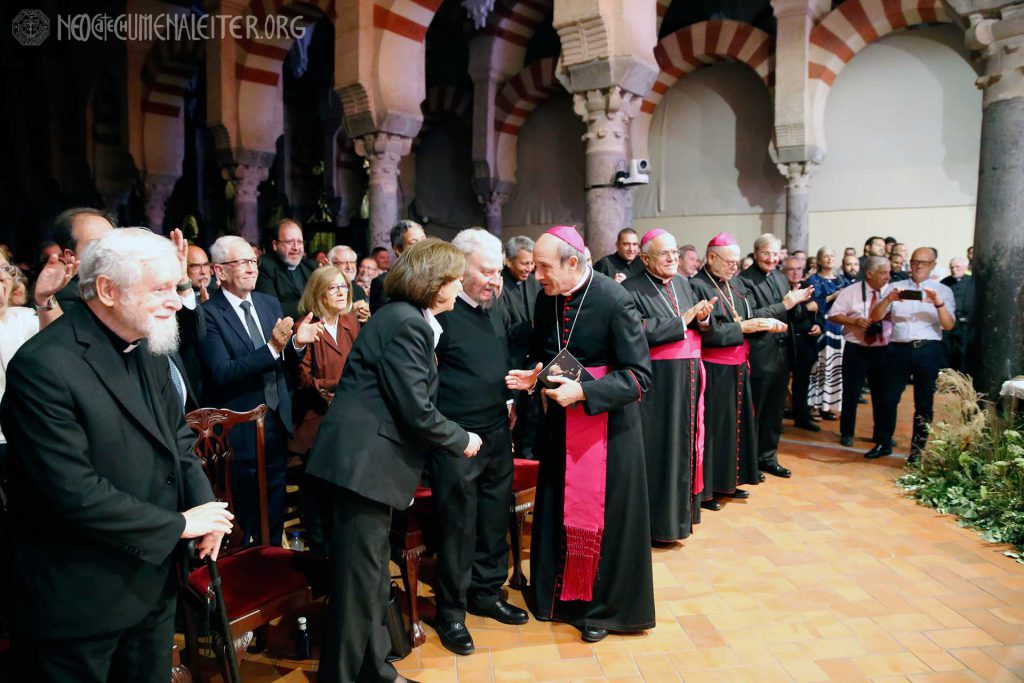
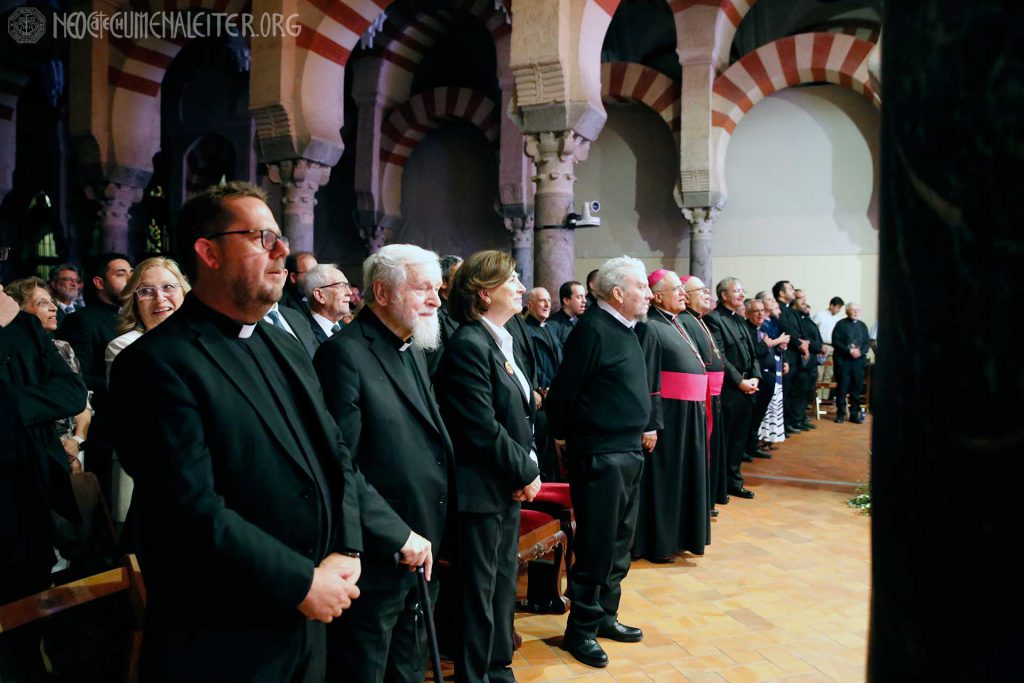
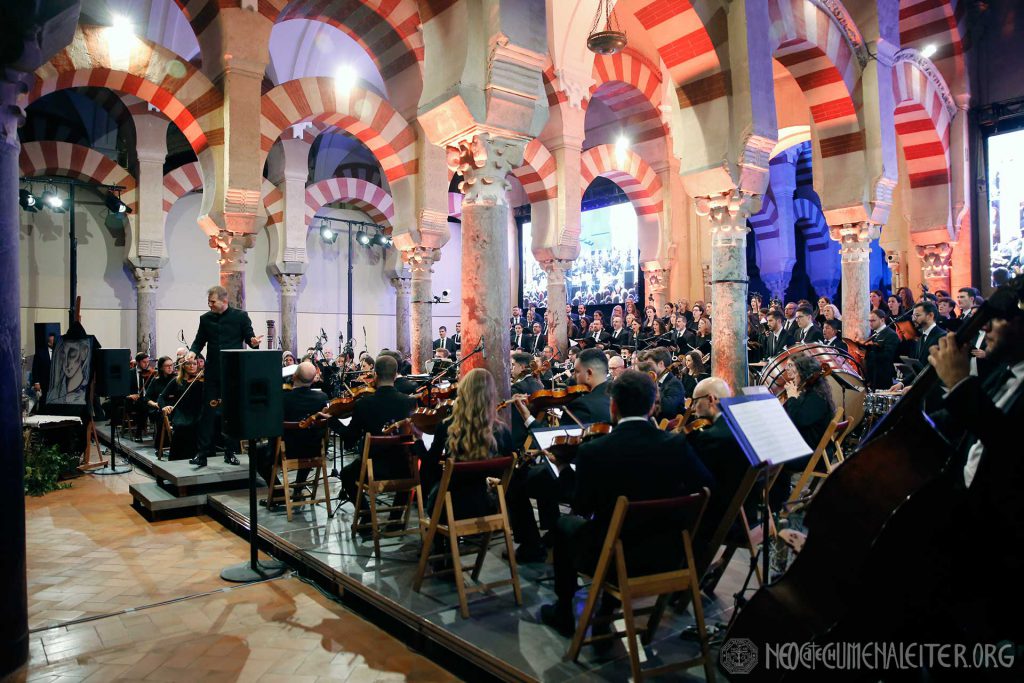
The Neocatechumenal Way Symphony Orchestra and Choir performed in Cordoba, in the impressive setting of the Mosque-Cathedral, before a temple packed with faithful and in the presence of several prelates. Among those in attendance were its titular bishop, Monsignor Jesús Fernández, Monsignor Demetrio Fernández, bishop emeritus of the same diocese, and Monsignor José Luis del Palacio, bishop emeritus of the diocese of Callao (Peru).
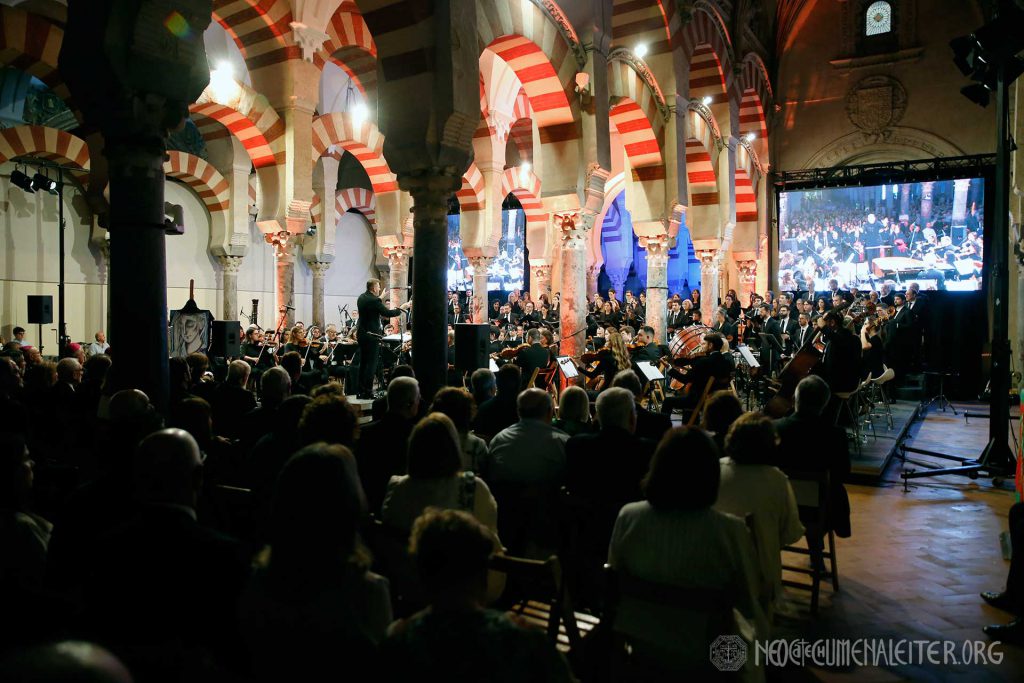
They performed Kiko Argüello’s complete symphonic works for the first time in Spain: the symphony entitled “The Suffering of the Innocents” and the symphonic poem “The Messiah.” Before each performance, the author, Kiko Argüello, presented each of his works. He emphasized in his speech that this concert was also a time of prayer for the innocent; Bishop Jesús of Córdoba was in charge of leading the prayer before the music began.
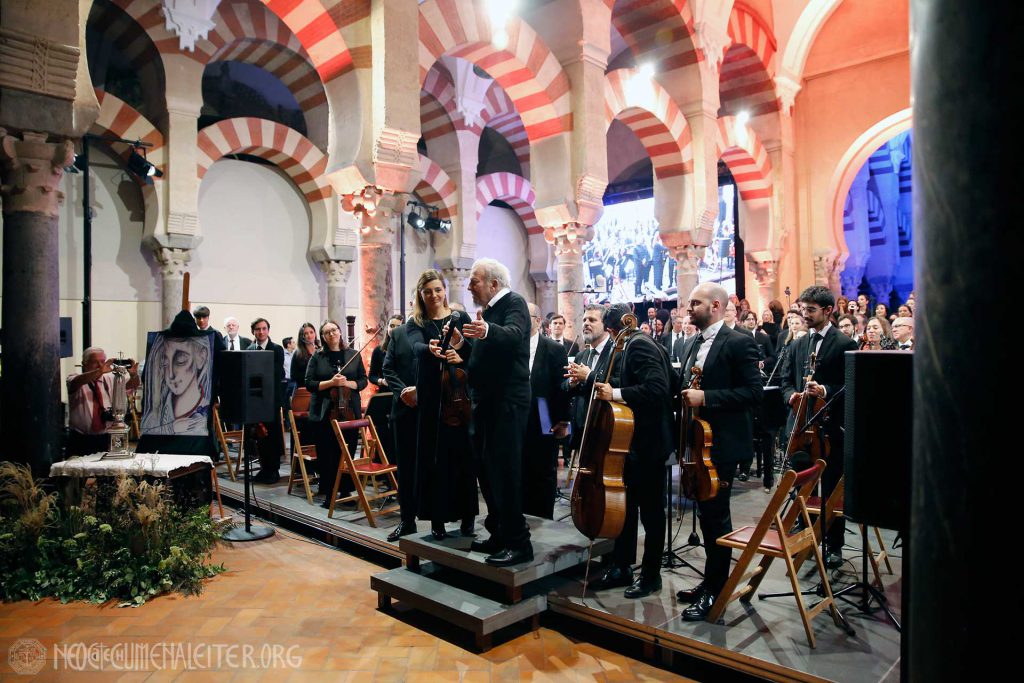
This event took place on such a special occasion as the commemoration of the 1100th anniversary of the martyrdom of Saint Pelayo, or Pelagio, as he is known in the capital of Cordoba.
An estimated 5,000 brothers and sisters from the Neocatechumenal Way came from all over Andalusia, with around 2,500 inside the cathedral and many others watching the event on large screens set up in the Patio de los Naranjos by the Cathedral Chapter. Many thousands more watched the broadcast on the YouTube channel made available by the Cathedral itself.
@mezquita-catedraldecordoba
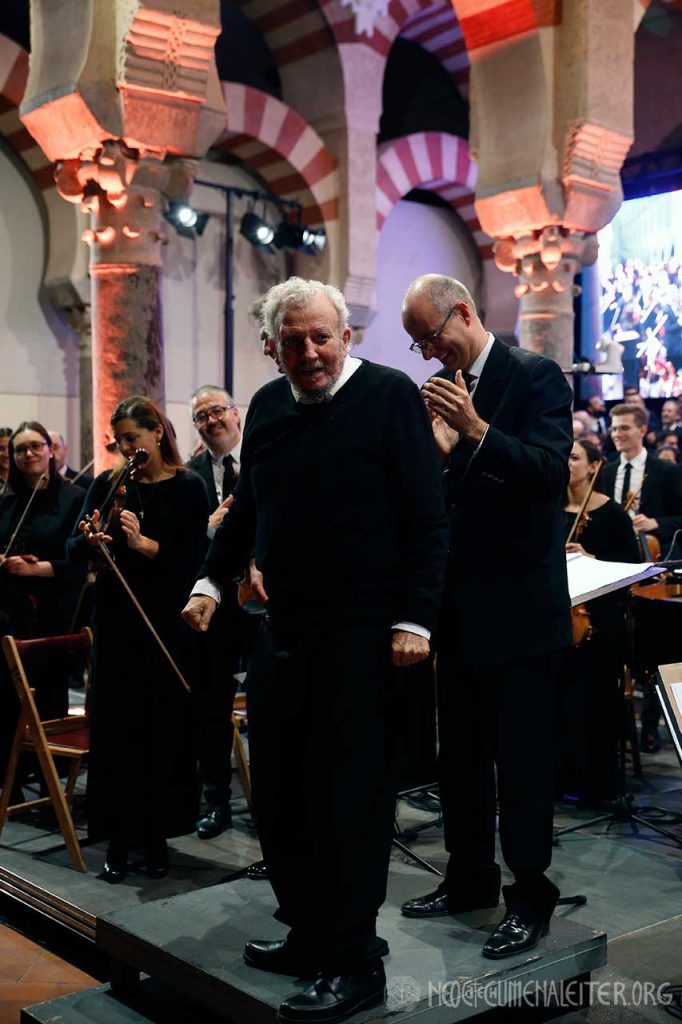
The Neocatechumenal Way Symphony Orchestra and Choir, founded by Kiko Argüello in 2010 and composed of more than 200 musicians of different nationalities, featured 160 performers, including instrumentalists and choristers, and gave a masterful and vibrant performance, which was exciting and moving in many moments. It was masterfully conducted by Tomáš Hanus, one of the best conductors on the current music scene, who has conducted the most prestigious orchestras in the world and is currently the principal guest conductor of the Icelandic Symphony Orchestra. Hanus is also the father of eight children and is part of the Neocatechumenal Way.
Since 2010, the orchestra has performed in theaters around the world. After its debut in the Sala Nervi before Pope Benedict XVI, the Orchestra and Choir of the Neocatechumenal Way has performed in Jerusalem, Paris, Madrid, New York, Boston, Krakow, Tokyo, Budapest, and Berlin, to name just a few of the most important venues. The 2013 performance at the former Auschwitz concentration camp, in memory of the victims of Nazism, was particularly moving and emotional. This was followed by Trieste, Rome, and Cordoba; Oviedo will soon join the list of cities that have had the pleasure of listening to these symphonic pieces composed in the spirit of the ancient oratorios.
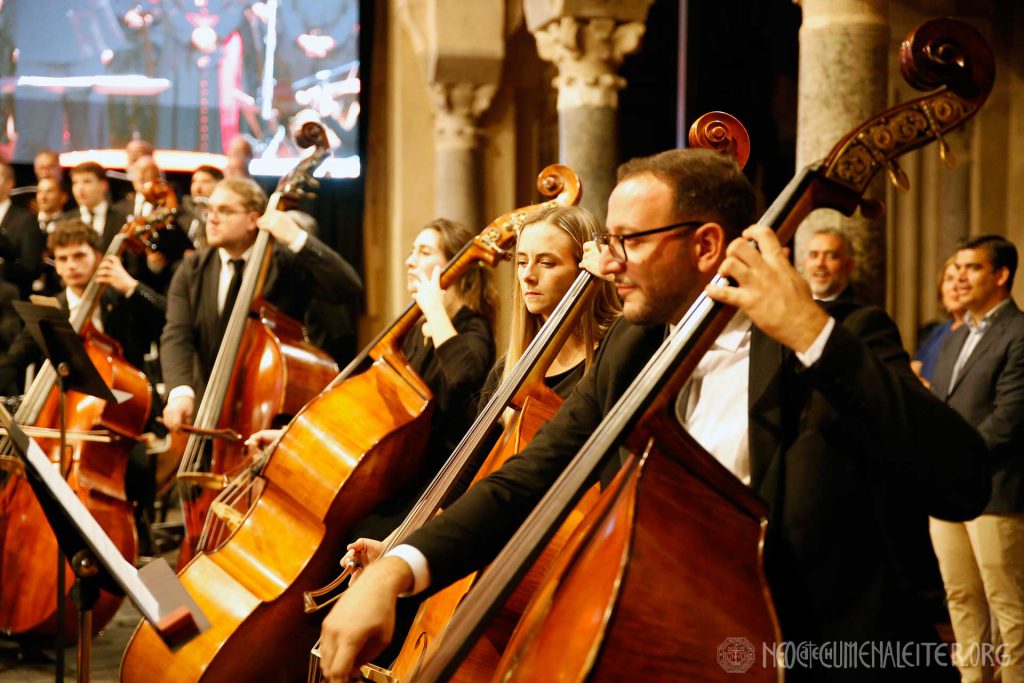
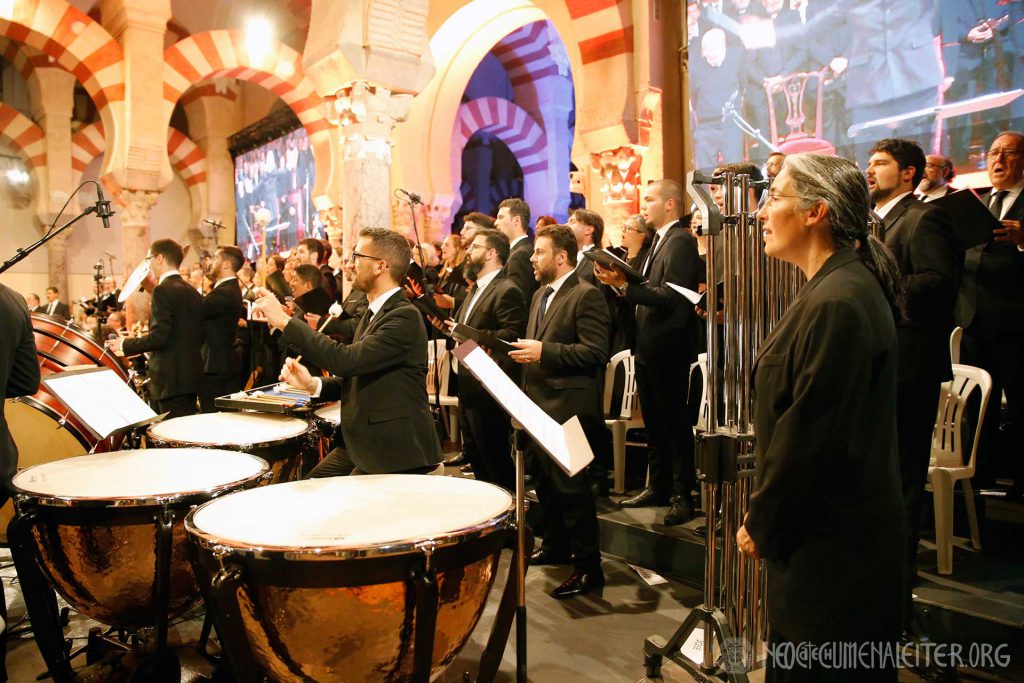
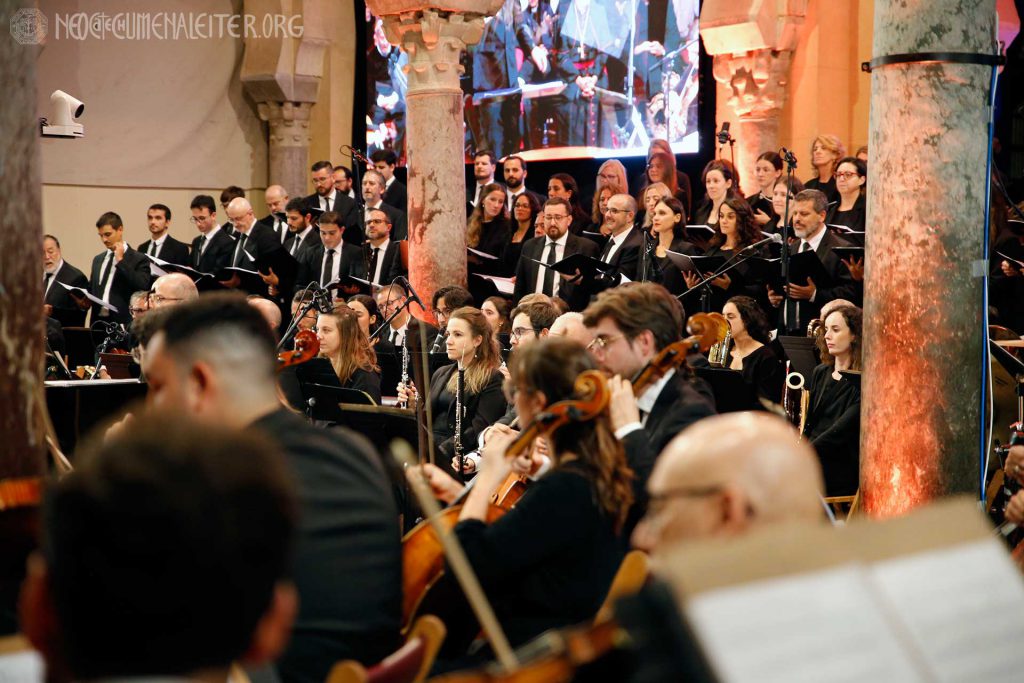
These works do not seek aesthetic emotion for its own sake or artistic grandiloquence. Their composer, in the same way that he uses his pictorial work, turns music into an instrument of special beauty to bring the Good News of the Gospel closer to contemporary, secularized man, in an understandable language that, with just the right words, moves and intoxicates from the very first bar.
The musicians masterfully draw the audience into this heart-wrenching and intense prayer that flows from each note. It is an orchestra that prays and invites us to accompany Christ and his Blessed Mother in these final hours of blessed and redemptive suffering, drawing us to Him in a beautiful and mysterious way; it invites us to allow ourselves to be washed and purified by his sacrifice. And when emotion and sadness seem to consume us, the last movement of “the symphony of the innocents,” the Resurrexit, transforms sweet tears into a torrent of life that connects pain with the joy of the resurrection that springs forever from Christ’s side. He has conquered death; he is alive and risen for us and because of us.
The performance of the Symphony of the Innocents was followed by a second piece, a symphonic poem for piano, choir, and orchestra entitled El Mesías (The Messiah). This is the response to the scandal of suffering, which Kiko Argüello, its composer, wanted to dedicate to all the martyrs who today bring to life the image of Christ, the Lamb who was slain and who offers his life for the salvation of the world. He achieves this through three movements: the first dedicated to the sacrifice of Isaac, the second presenting Christ on the Via Dolorosa on his way to Calvary, and the third contemplating the majesty of God who saves by offering his blood.
Therefore, on the occasion of the 1100th anniversary of St. Pelagius, and in his honor and that of so many holy martyrs who, having been able to choose other means that were humanly more appealing and rationally more effective, decided to join Christ’s redemptive sacrifice. They remind us that this was the way chosen by God to save the world: that the blood of the martyrs, their suffering, like all our sufferings united to those of Christ, are the seed of Eternal Life that enriches and ennobles each generation, making present the passion and resurrection of Our Lord Jesus Christ.
For all these reasons, the composer of the work and initiator of the Neocatechumenal Way, wanted these notes to be heard in the city of Cordoba, whose ancestral splendor is reflected in its Holy Cathedral Church. These notes evoke not only the Passion of Christ, but also that of his countless martyrs on the banks of the Guadalquivir, a river that has returned the bodies to its banks and drunk the blood of hundreds of martyrs: first those of the persecutions of Decius and Diocletian, then the countless Mozarabic martyrs, and, in more recent times, those of the violent persecution that took place between 1936 and 1939.
All this in his honor and for the greater glory of the Almighty.