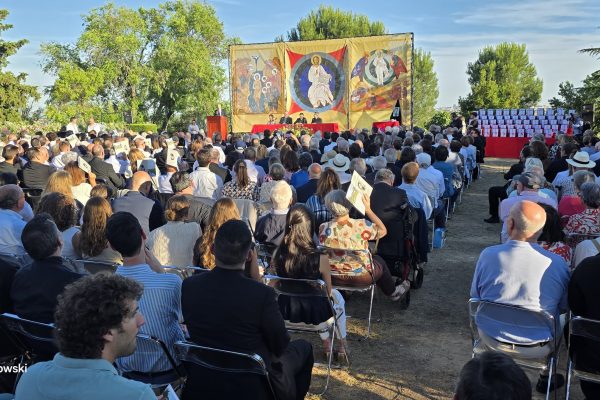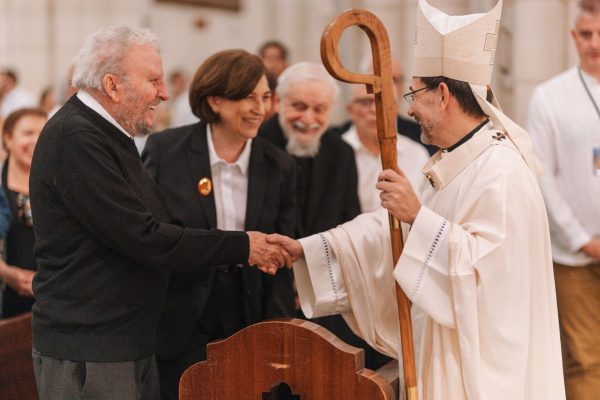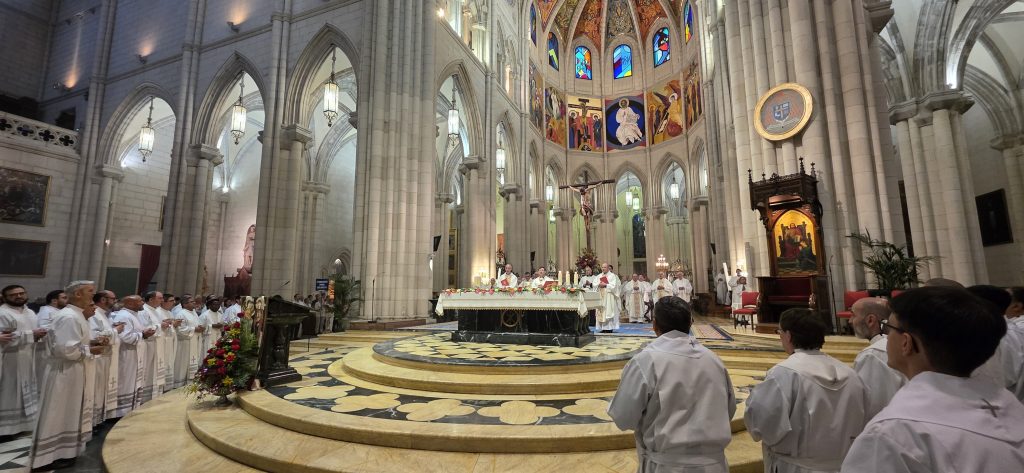
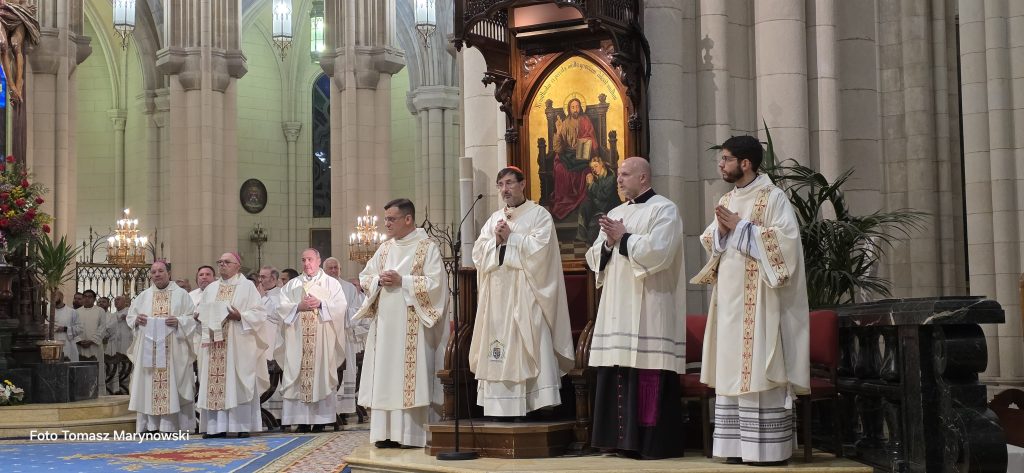
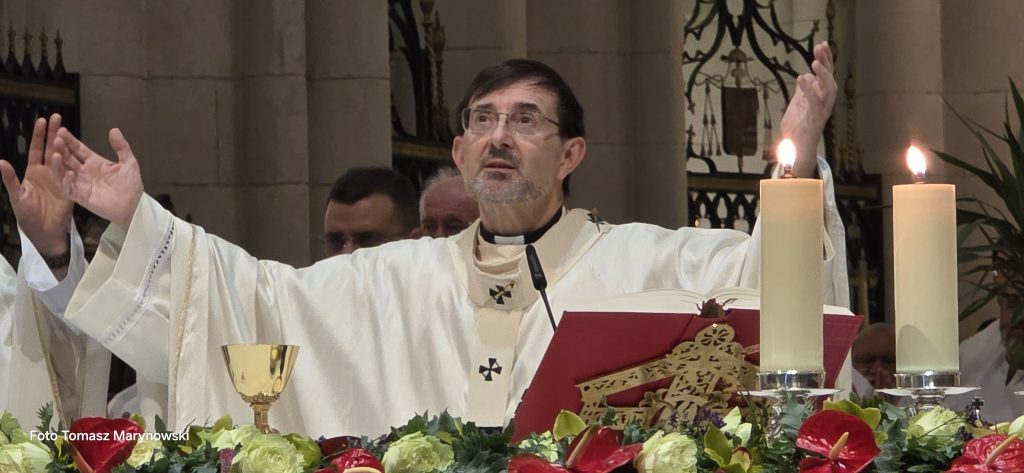
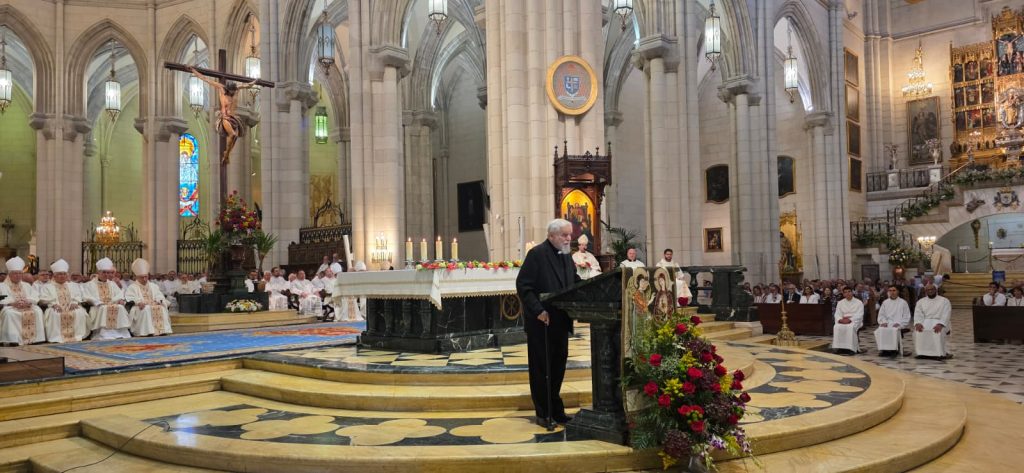
More than 6,500 members of the Neocatechumenal Way participated on the afternoon of Saturday, May 30, in a Mass of thanksgiving for the 60th anniversary of the Neocatechumenal Way at the Almudena Cathedral in Madrid. It was presided over by the Archbishop of Madrid, Cardinal José Cobo Cano, and concelebrated by several bishops and more than one hundred priests. It was attended by itinerant groups that evangelize around the world.
Pope Leo XIV and Cardinal Kevin Farrell, Prefect of the Dicastery for Laity, Family, and Life, have sent messages congratulating the Way and encouraging it to continue its evangelizing mission.
In the message, the Pope, through the Vatican Secretary of State, Cardinal Pietro Parolin, states that “we must remember that the mission of evangelization is a fundamental task of the entire Church, which, with joy and humility, seeking the unity of all its members, and open to the action of the Holy Spirit, strives to bring the gift of salvation to all. May this conviction be a motivation to take on this missionary work on behalf of God’s beloved children.”
In addition, Pope Leo XIV assures them of his prayers “and implores the intercession of the Blessed Virgin Mary, Mother of God; he imparts his apostolic blessing, which he gladly extends to their families and other loved ones.”
From early in the afternoon, hundreds of members of the Neocatechumenal Way waited outside the Almudena Cathedral to enter the church.
At 6:30 p.m., the cathedral opened its doors, and the congregations took their seats in their assigned areas.
In the squares adjacent to the Cathedral—St. John Paul II Square and the Royal Palace Square—hundreds of faithful—including many young people and families—took their seats on the chairs set up there to watch the celebration on giant screens.
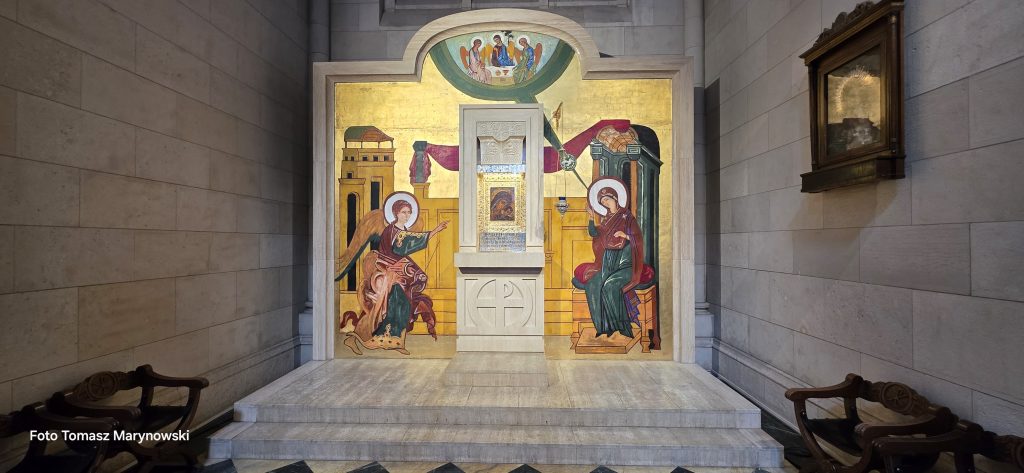
Before the Mass began, many people wanted to pray in the chapel dedicated to the Way inside the Cathedral, where the original icon of the Virgin Mary is kept. In preparation for the Mass and Pope Leo XIV’s visit to Madrid, the lighting has been changed and some touch-ups have been made to the painting surrounding it.
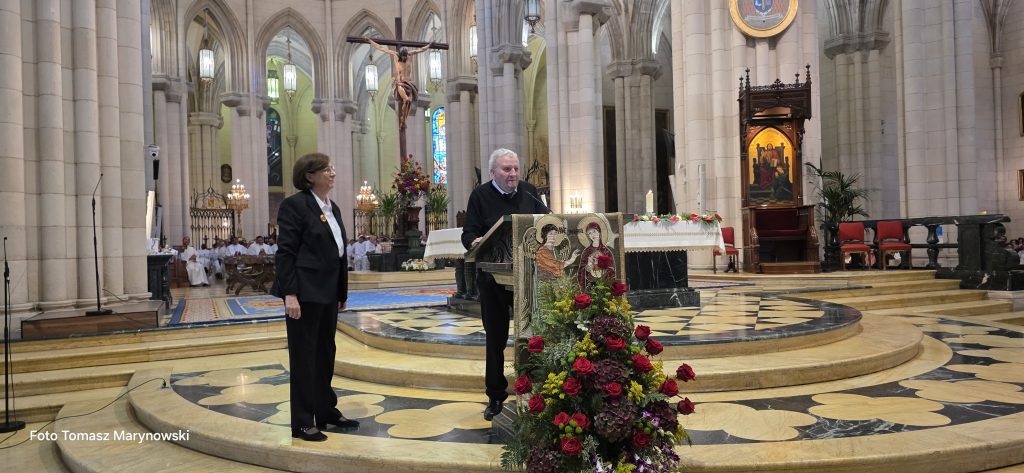
Upon their arrival, the team in charge of the Camino—Kiko Argüello, Ascensión Romero, and Fr. Mario Pezzi—received a warm round of applause.
The celebration began, before the entrance procession, with an address by Kiko in which he thanked the Archbishop of Madrid for his hospitality and greeted the more than 130 priests. “We have gathered to celebrate a Mass of thanksgiving for the more than 60 years of the Neocatechumenal Way. History is important; we must remember how the Lord has acted throughout all these years,” Kiko began.
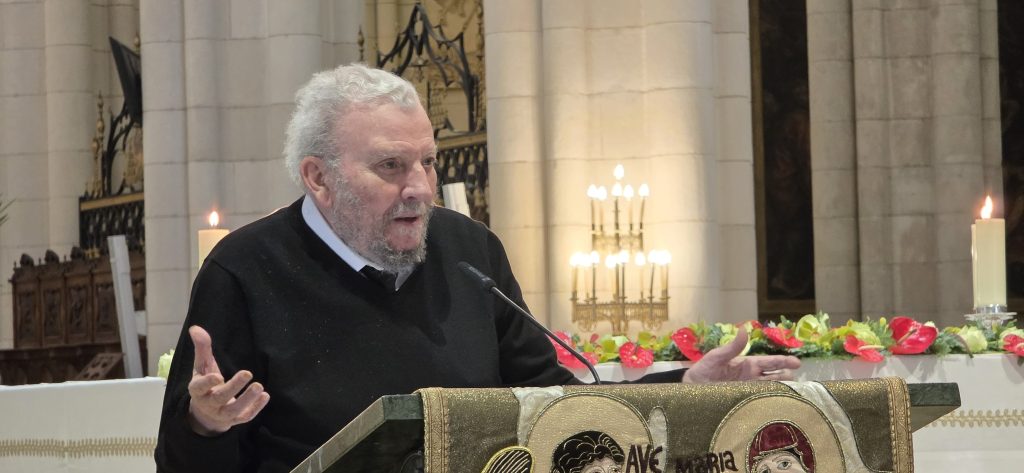
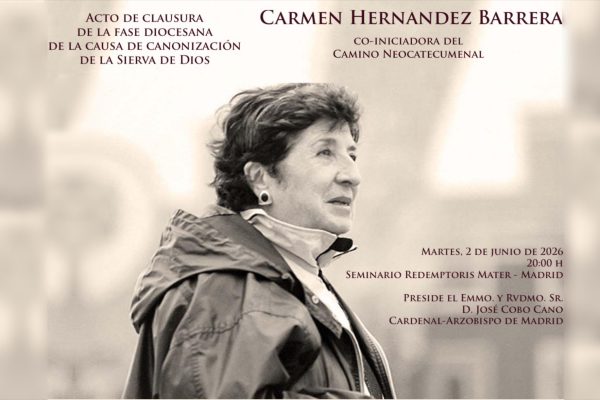
As he looked back on the history of the Way, he expressed his joy at the diocesan conclusion of the canonization process for Carmen Hernández.
“In the Way, we do nothing without the Pope and without the bishops. If the Way has spread so remarkably, it is thanks to the support of all the Popes, who have regarded it as a gift of the Holy Spirit for the good of the Church,” Kiko stated.
He also recalled that the Way “is a Christian initiation brought about by the Holy Spirit as one of the fruits of the Council. “What was being put into writing at Vatican II, Carmen and I were putting into practice in the barracks at Palomeras Altas. The Way has not been built on preconceived ideas but on a series of events in which God has been at work, and we have been able to bear witness that God is alive in his Church.”
For his part, the Archbishop of Madrid, Cardinal Cobo Cano, recalled the early days of the Way “among the shantytowns of Palomeras Altas,” where “an experience was born that sought to proclaim that Jesus Christ continues to go out to meet every person, especially those who feel forgotten.”
“It’s no coincidence that it emerged there: God often sows his most fruitful works in places the world barely notices, and through specific people like Kiko, Carmen, and so many others who have come since,” he said.
“In this church, you took your first humble and modest steps in the Palomeras neighborhood of Vallecas, like the seed of the Gospel, accompanied by the Church—always Mother and Teacher, always close at hand to encourage and, at times, to correct.”
“That seed, on the eve of the Council, was welcomed and discerned by the Church of Madrid, thanks to the insight of Casimiro Morcillo, who recognized in it a call from the Spirit for the evangelization of the entire Church. Sixty years later, we give thanks for God’s faithfulness, which continues to open new paths for proclaiming the Gospel and calls the Church to face the challenges of every age through the Word of God, liturgical life, and community,” he added.
In his homily, he also recalled that “communion is rooted in the Trinity and is expressed in the richness of vocations, charisms, and ministries that the Spirit brings forth for the good of all.”
“Do not hesitate to engage in dialogue with our society regarding its most complex realities, from which conversion is not always expected; for the purpose of proclamation is to make Jesus and his Gospel known, while respecting the response and the path of freedom that each person chooses to give concrete expression to that response.”
The cardinal concluded by emphasizing that “the Church of Madrid and its bishop wish to thank the Neocatechumenal Way for its evangelizing work over the past sixty years in so many different communities throughout this city.”
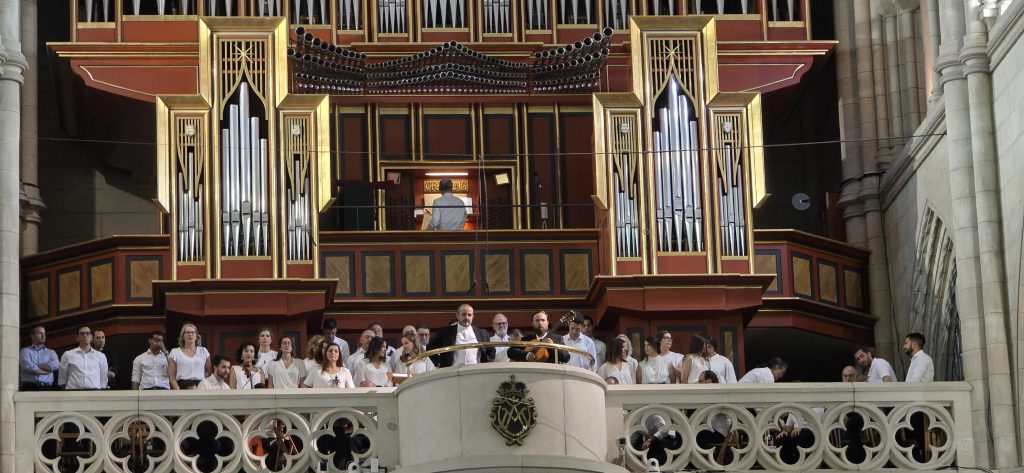
The celebration, which was experienced as a true expression of thanksgiving—also through song—concluded with the reading of a letter from Pope Leo XIV in which he congratulated the Way on its 60th anniversary.
In addition, Cardinal Kevin Farrell, Prefect of the Dicastery for Laity, Family, and Life, sent a warm greeting in which he highlighted how “Spain has given the Church shining examples of Christian life and spiritual renewal through saints, martyrs, evangelization initiatives, schools of prayer, ecclesial movements, and spiritual currents.”
“Among these fruits, – continues the text- we can certainly include the Neocatechumenal Way, born of the fruitful encounter between its two founders, Kiko Argüello and Carmen Hernández Barrera, and the poor in the most humble neighborhoods of Madrid. The desire to proclaim and live the Gospel among those whom Providence brought them to meet led to the birth of the first communities and the gradual formation of a journey of initiation into Christian life which, with the counsel and encouragement of the Church’s pastors, was transferred to parishes and then spread to every part of the world.”
The Prefect of the Dicastery for Laity, Family, and Life adds:
“It can be said that from the ‘tree’ of Christian initiation—rediscovered and put into practice by reviving the ancient ecclesial tradition of the catechumenate—many other “branches” have also sprung forth, which have done, and continue to do, much good for the Church: itinerant catechists, diocesan missionary seminaries, missionary families, new parishes founded in mission territories, the evangelizing activity of the “missio ad gentes,” the formation and accompaniment programs for adolescents after Confirmation and for young adults, with the practice of monthly lectio divina and annual summer pilgrimages.”
Pope says “Mission” is the Church’s task as Neocatechumenal Way marks 60 years. Débora Donnini