
Joaquín Panzerini Photo Gallery
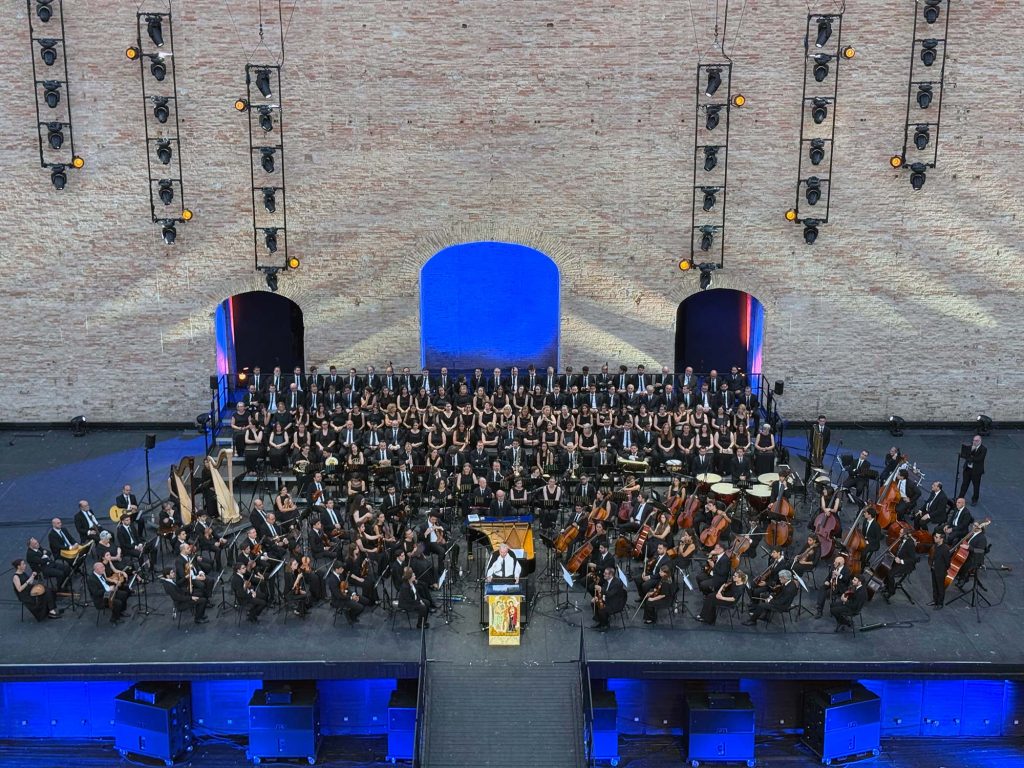
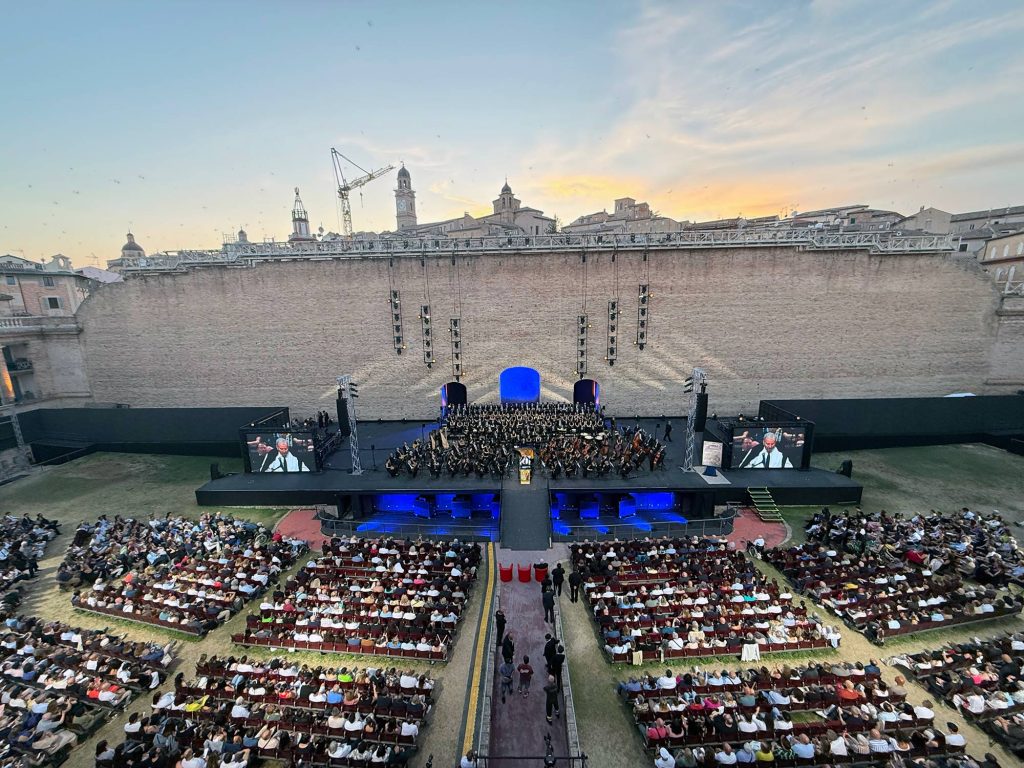
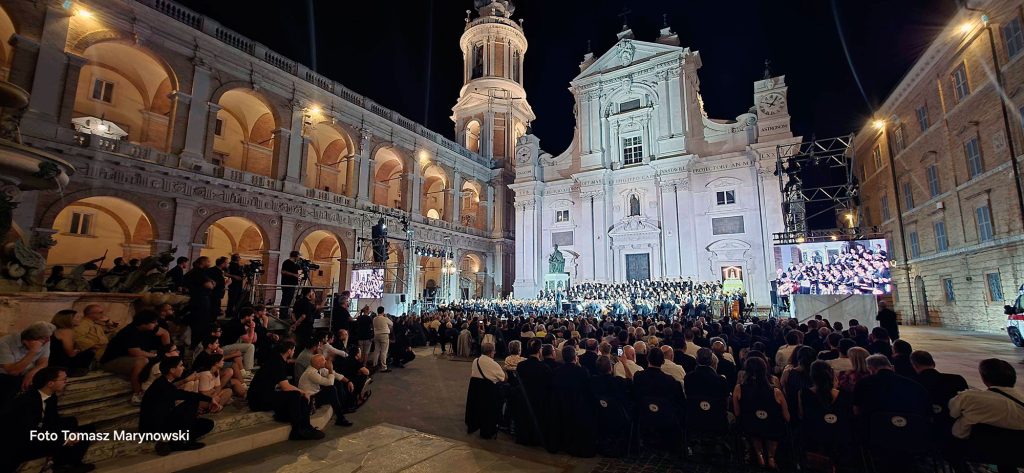
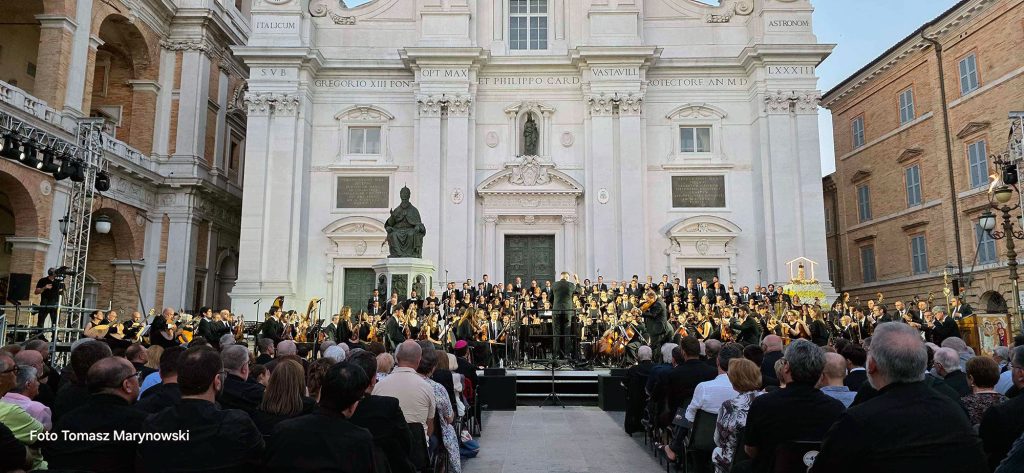
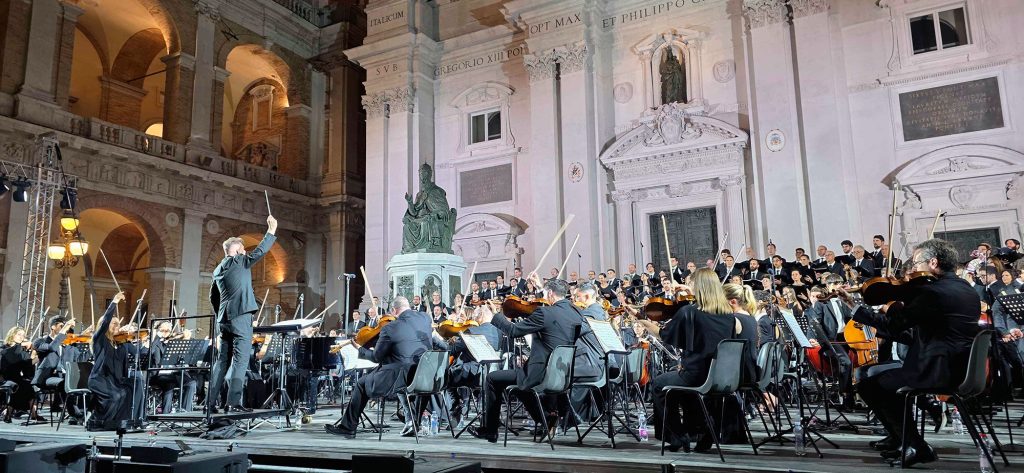
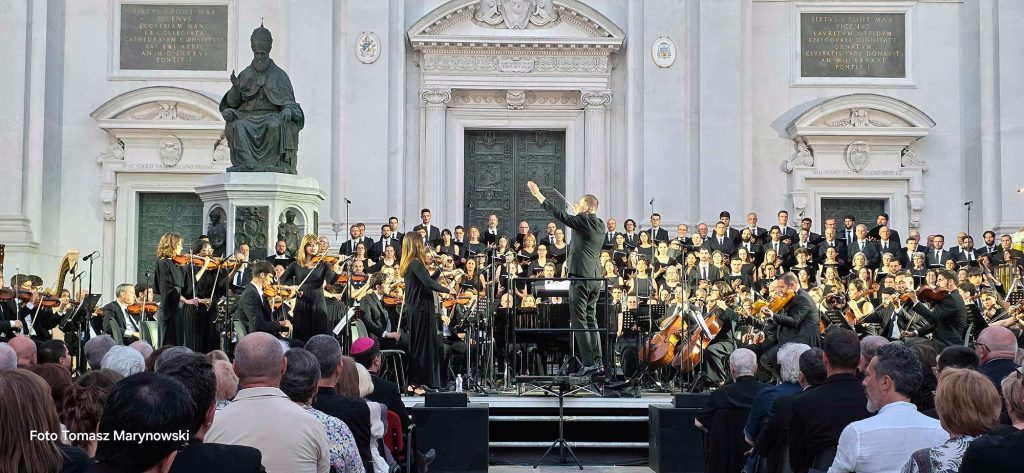
In the evocative setting of the square in front of the Basilica of the Holy House in Loreto, at dusk on Friday, June 19, 2026, an exceptional event took place, rich in meaning, intensified by the gesture of the conductor who, as he began the “encore” of the final movement dedicated to Mary, raised his hand toward heaven as if to open it up to make the Blessed Virgin present.
With Kiko Argüello in attendance—who was greeted with great affection and a warm round of applause upon his arrival in the square—along with Father Mario Pezzi and Ascensión Romero, the international team responsible for the Neocatechumenal Way, 800 priests who have emerged in recent years from the 38 Redemptoris Mater diocesan seminaries in the Americas, accompanied by the itinerant teams responsible for the American nations, and in the presence of His Excellency Archbishop Fabio Dal Cin, Papal Legate for the Holy House of Loreto, his Vicar General, the Rector of the Holy House, along with some Capuchin friars, the double symphonic catechetical composition “The Suffering of the Innocents” and “The Messiah”—two symphonic works composed by Kiko Argüello—was performed.

“The Suffering of the Innocents” (2010) has been performed in major theaters, concert halls, squares, and cathedrals around the world: Jerusalem, Rome, Madrid, New York, Chicago, Budapest, Tokyo, Berlin, Lublin, Auschwitz…”. “The Messiah” premiered in 2023 at the Verdi Theater in Trieste. On June 1, 2025, at the “Ennio Morricone Music Park” auditorium in Rome, in the Santa Cecilia Hall, on the occasion of the Jubilee of the Family, complete symphonic work composed by Kiko Argüello was premiered. Both compositions were subsequently performed at the Mosque-Cathedral of Córdoba, the Oviedo Music Auditorium, and the Cathedral of Toledo.
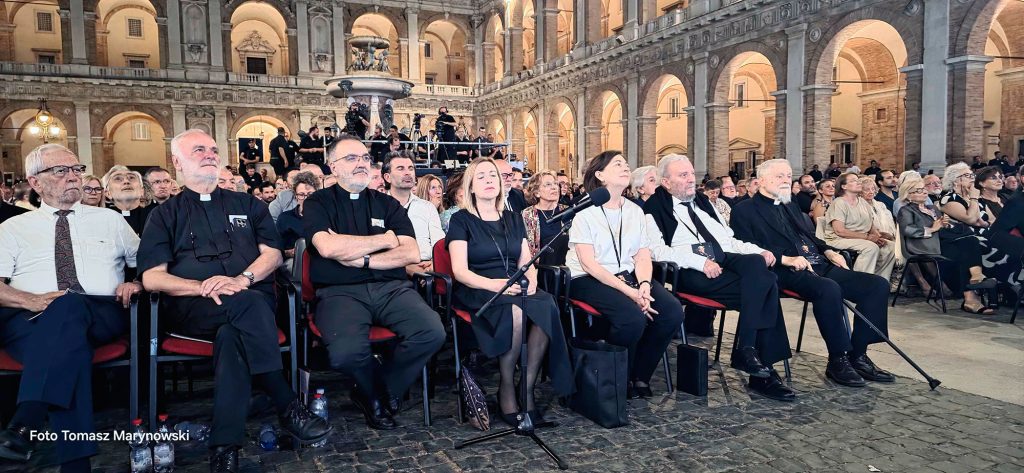
The first special significance lies precisely in the presence of the 800 priests from the Americas who are gathered at the Neocatechumenal Center in Porto San Giorgio, not far from Loreto, for a time of formation and evangelization: the next day, they were all to set out, in pairs, to nearly every diocese in Italy, carrying the kerygma and the beauty of Christian initiation—which, through the Neocatechumenal Way, has touched and transformed their lives.
In this Franciscan Year, which marks the eighth centenary of the death of St. Francis of Assisi, the founder of the Way has chosen to revive, through these 800 priests, one of St. Francis’s own practices: following Christ’s example, St. Francis also sent his friars out two by two to spread the Gospel.
Another exceptional significance of this event is the 60th anniversary of the beginnings of the Way in the Diocese of Madrid, where a celebration was held in late May to mark this occasion: from this small seed that sprouted on the outskirts of Madrid, in Palomeras Altas, among the poorest and most abandoned, a form of Christian initiation has gradually taken shape, which has been definitively approved by the Holy See, and is now present in 138 countries across five continents, with more than 21,000 communities. It has contributed to the establishment of 115 Redemptoris Mater seminaries in as many dioceses around the world, where nearly 3,400 priests have already been ordained.
To cap off this event, a few days later, also in Madrid, the diocesan phase of the Cause for Beatification and Canonization of the Servant of God Carmen Hernández, co-founder of the Neocatechumenal Way, came to a close.
A particularly close connection between the Way and Loreto has to do with the Virgin Mary. On December 8, 1959, before this ecclesial reality began, it was she who appeared to the young Kiko Argüello in his room, through an interior voice that gave him a command, a true mission: “We must form Christian communities like the Holy Family of Nazareth, who live in humility, simplicity, and praise. The other is Christ.” These words have become the essence of the entire Neocatechumenal Way, pointing to its three defining stages: the stage of humility, the stage of simplicity, and the stage of praise. And the Way is also linked to Loreto for another reason: there is a specific stage in which each community makes a pilgrimage to Rome, to the tombs of the Apostles, to renew and strengthen their faith; and in addition to Rome, they visit Loreto to receive Mary as Mother from Christ.
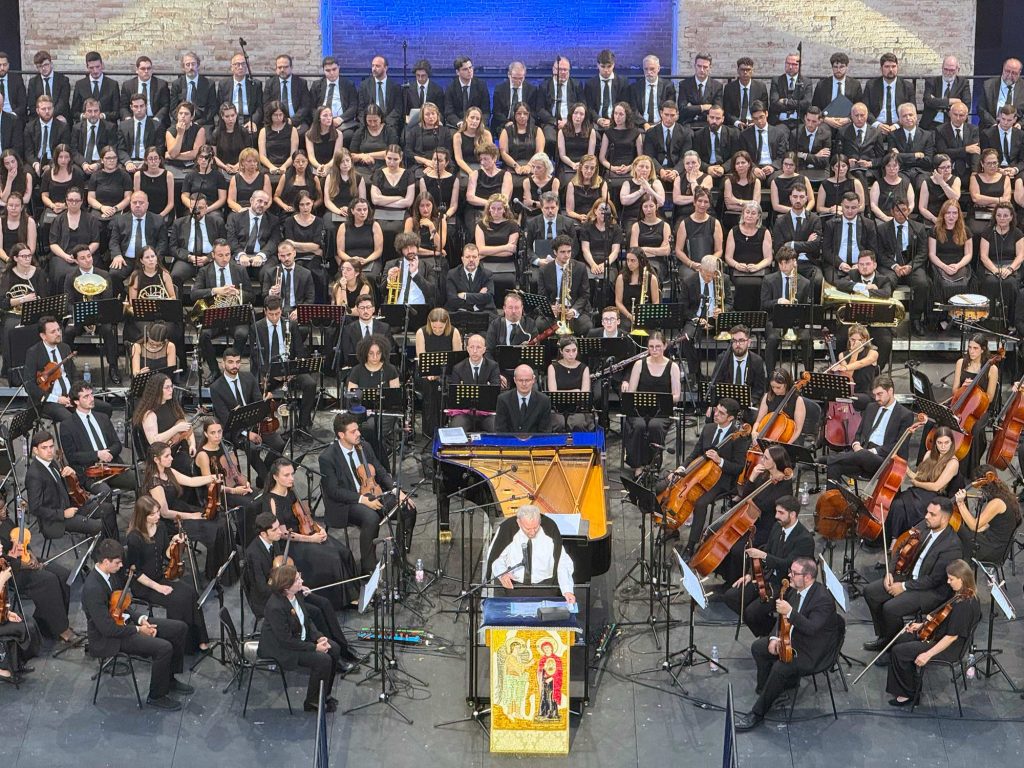
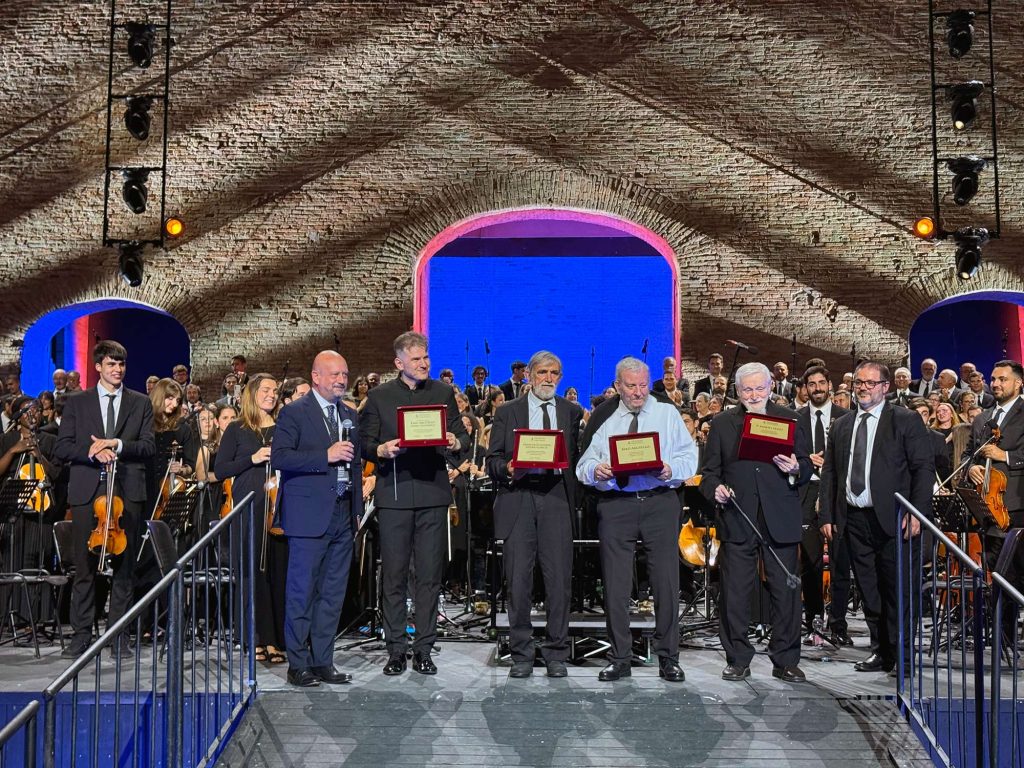
Along with these events linking the Way to Loreto, there is another special highlight: the presence of the orchestra and choir of the Neocatechumenal Way, composed of 100 musicians and more than 100 choir members, respectively, who, under the masterful direction of Tomáš Hanus—a brother from the Czech Republic with extensive professional experience—gave their very best.
The Greeting of the Bishop and of Kiko
The greeting from Archbishop Fabio dal Cin was brief but particularly warm: “Mary extends the warmest welcome to you from her Holy House: make yourselves at home this afternoon!” He went on to greet the founder of the Way and all the priests present, recalling that for years now, almost every Monday and Tuesday of every week of the year, on the occasion of the specific stage of the Way mentioned above, communities from all over the world have been coming to the Holy House of Loreto to welcome Mary as their Mother. He emphasized that “we must lift our gaze to Mary to ask her for the grace to help us welcome Jesus as she did. She gave her flesh to Christ, and we too are called to give our flesh, our lives, so that the Son of God may become incarnate in us and thus become flesh in the reality we live in every day.”
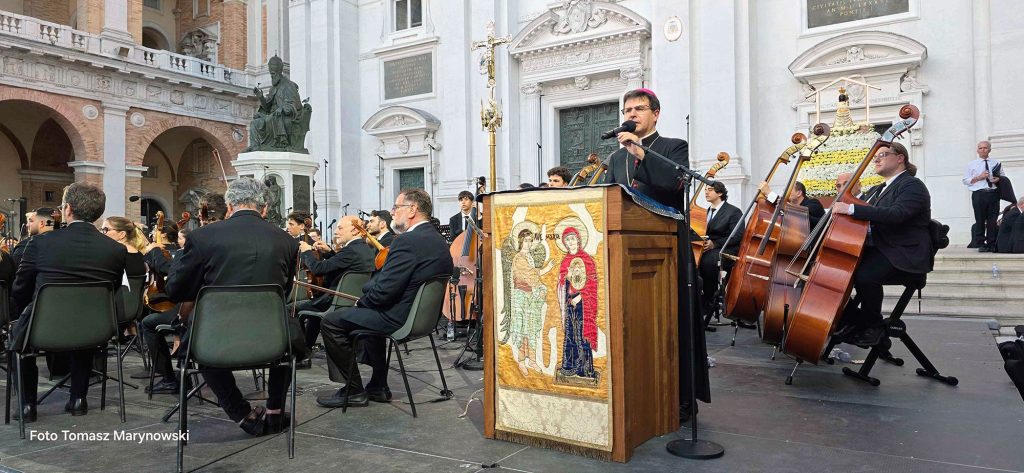
In his greeting, Kiko thanked the bishop for welcoming us and for being present at the gathering, and he also thanked the civil authorities. He then recalled how, together with Carmen, “we have seen it as providential that the International Center in Porto San Giorgio is so close to the Shrine of Loreto, since the Neocatechumenal Way has as its symbol the Holy Family of Nazareth, and here, in this basilica, is their home. Here are the authentic walls of the Virgin’s House where the angel appeared. These are the stones of Nazareth, witnesses to the Incarnation of the Son of God.”
He went on to recall that “the Virgin Mary has inspired the Neocatechumenal Way, for she said: ‘We must build Christian communities like the Holy Family of Nazareth.’ She has always prayed for us; she has always been our Mother. It was she who saw the loneliness of contemporary man and showed us the community as a place of encounter and salvation.” He concluded: “It is moving to be here, near the Holy House of Loreto, where the brothers and sisters of the Way discover the immense love that the Blessed Virgin Mary has for people. It was she who saw our sins, who saw that we had no wine, and who said to Jesus, ‘They have no wine.’”
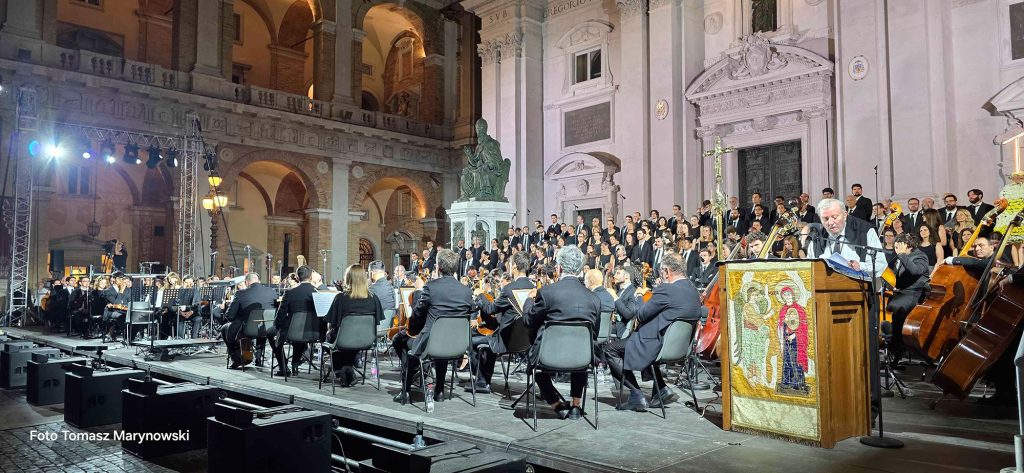
Presentation of the symphonic-catechetical work: “The Suffering of the Innocents”
Kiko, as is his custom, presented his work in its various movements: “I do not know how, but one day the Lord inspired me to compose a symphony in honor of the Virgin Mary. I have always been moved by her suffering—seeing the Virgin’s soul pierced by a sword at the foot of the cross.” He went on to say that “in this small work, the Virgin Mary is presented as subjected to the horror of the suffering of the innocent in her own flesh—in the flesh of her own Son.” And in the face of this suffering, we too, with deep emotion, “would like to contemplate and support the Virgin as she accepts that sword that pierces the soul of this poor woman—Mary! Mother of God! Holy Theotokos! Take heart! You are the Mother of that God who became sin for us and offers himself for the salvation of all. Mother of God and our Mother!”
He then recalled the five movements that make up this symphony: “Gethsemane,” whose music is meant to remind us that our Lord Jesus Christ had to drink a cup of bitterness for the sins of humanity; “Lament,” where we see Christ crucified and the Virgin Mary present in this suffering; in the third movement, we see Christ on the cross crying out, “Forgive them, forgive them!”; the fourth movement is called “The Sword”—it is the moment when the sword pierces Mary’s soul and the entire choir sings, “Mary, Mother of God!” Kiko added: “At this moment, usually during concerts, we invite everyone to stand and we all sing along with the choir: ‘Mary!’—as if to say, ‘Take heart, take heart, for you are the Mother of God!’—as if trying to support the Virgin beneath the cross.” And finally, after all this mystery of suffering, “Resurrexit”: Christ has risen and conquered death. We will listen to the fifth movement, which celebrates Christ’s resurrection, because Christ has truly risen!
The performance of the various movements was exceptional, with a vibrant contribution from the musicians, the choir, and the conductor himself, which spread to the entire audience, creating a palpable sense of emotion.
“The Messiah”
After a brief pause, the performance moved on to the second piece: “The Messiah,” also introduced with a few words by the composer himself, Kiko Argüello: “God inspired me to write ‘The Messiah,’ a symphonic poem for piano, choir, and orchestra about the Passion and suffering of Christ, which I have chosen to dedicate to today’s martyrs. We hope it will touch people’s hearts and evangelize them, because through martyrdom we can proclaim the Gospel through music… God has chosen to reflect in us the image of his crucified Son, because this is what we are called to do: to be a lamb that suffers, like the Messiah. Only in this way will we fulfill our mission in the world; only the Lamb can defeat the ‘beast.’”
The author then presented the three parts of the poem: “Akedá,” “Daughters of Jerusalem,” and “The Messiah, the Lion Who Will Conquer” “Akedah” is a Hebrew word meaning “Bind Me” and is found in the Targum Neofiti…, to which are added the words of an angel: “Come and see faith on earth: a father who sacrifices his only son, and the beloved son who offers his neck to him”… “I have set this text to music; it speaks of Isaac, an image of Christ’s humility, who, though the Son of God, humbled himself and became sin for us,” at the moment when he says to his father: “Bind me, bind me tightly, so that your sacrifice may not be in vain.”
When introducing the second piece, “Daughters of Jerusalem,” Kiko said: “I have tried to set to music a passage from the Passion according to Saint Luke—the words of Christ, as he carried the cross, to the women: ‘Daughters of Jerusalem, do not weep for me! For if they do this to the green wood, what will be done to the dry?’” Terrible words, Kiko recalled, “and so profound that they give meaning to the Passion—to Our Lord’s suffering to take away humanity’s sin—and reveal the full evil of sin.” Kiko then added: “To express the drama of this Gospel, I drew inspiration from the polyphonic works of the Spanish Renaissance composer Tomás Luis de Victoria. The tenors and sopranos convey the tragedy that Christ is experiencing on the Via Dolorosa.”
Finally, the third movement: “The Messiah, a Lion to Conquer”: “I wanted to set to music,” said the composer, “a phrase by a fourth-century martyr, Victorinus of Pettau, who was martyred under Emperor Diocletian… and who coined this poetic phrase: ‘The Messiah, a lion to conquer, became a lamb to suffer.’ I composed a song based on this phrase and added another from a confessor of the faith named Saint Quodvultdeus, a fifth-century bishop of Carthage, who says: ‘He ascended the cross to be a bridegroom, to die. And he left his blood as a dowry for his Virgin Bride.’ I wanted to set these two phrases to music because I want to bring you closer to the culture of the early centuries, of the great Christians, of the martyrs, who are so important.”
“This symphonic poem,” Kiko concluded, “is a song of love. The Lord is in love with every person; He has loved us so much that He gave His life, even shedding His Blood for us. This poem tells the story of God’s love for each one of us: the battle He had to fight to bring us to heaven.”
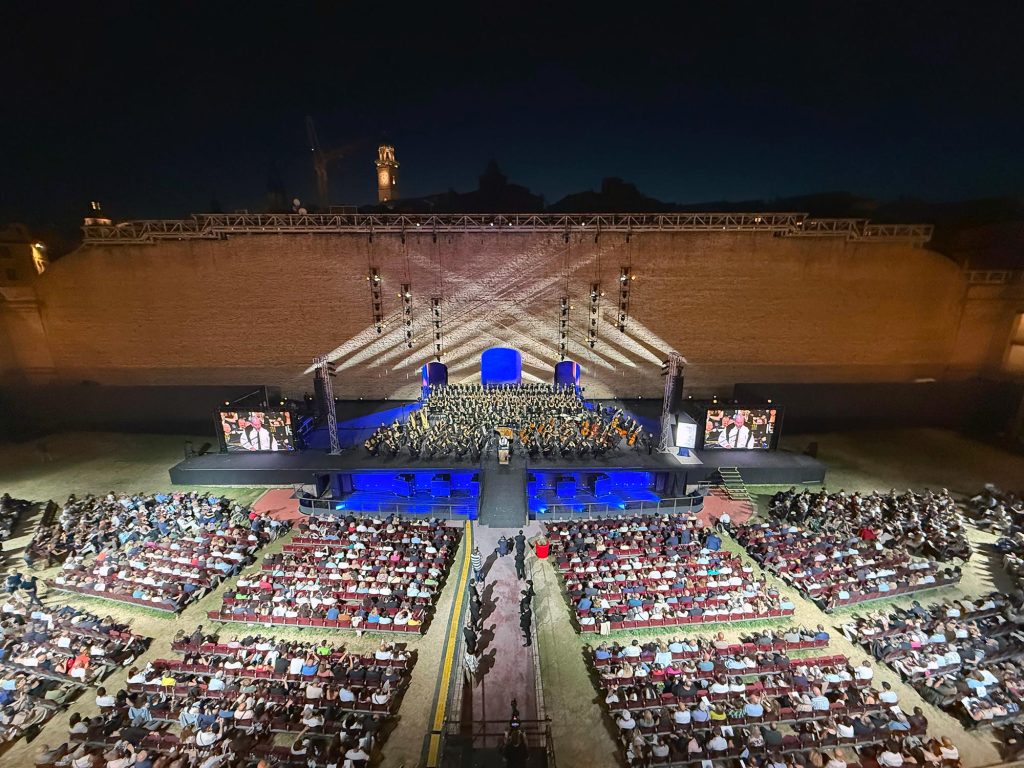
Once again, the performance was exceptional and moving, and the long final applause prompted the orchestra to grant “encores” of some pieces—generously offered—inviting everyone to join in a moment where the night, the setting of the splendidly illuminated basilica that framed the orchestra and choir, and the magnificent bell tower, all captured everyone’s gaze, drawing it toward the sky—that very sky to which the words of Kiko had pointed just moments earlier.
The symphonic work at the Sferisterio in Macerata
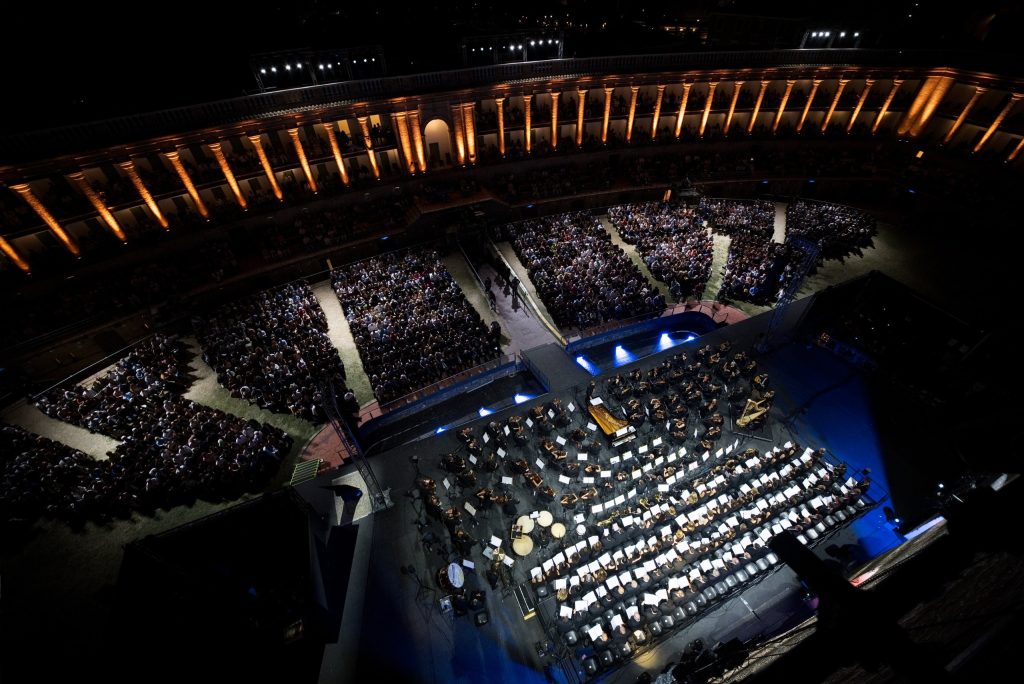
Once this symphonic event in Loreto had concluded, the production and the entire orchestra traveled to the Sferisterio in Macerata, “an imposing neoclassical-style open-air amphitheater, built between 1823 and 1829 and now home to the Macerata Opera Festival, one of Italy’s most important opera events.” Given the exceptional nature of the event, city officials agreed to make this open-air theater available for the evening, which will bring together thousands of brothers and sisters from the numerous Neocatechumenal communities in the region, gathered around the founder of the Way, to experience this precious and intense moment of communion and celebration.
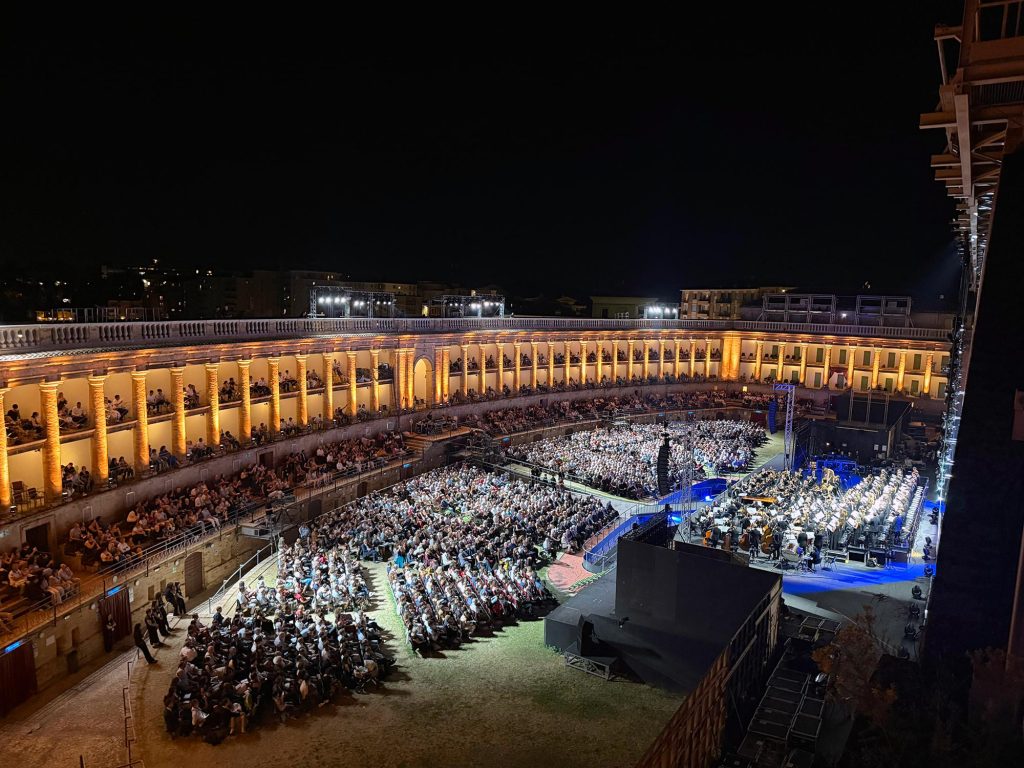
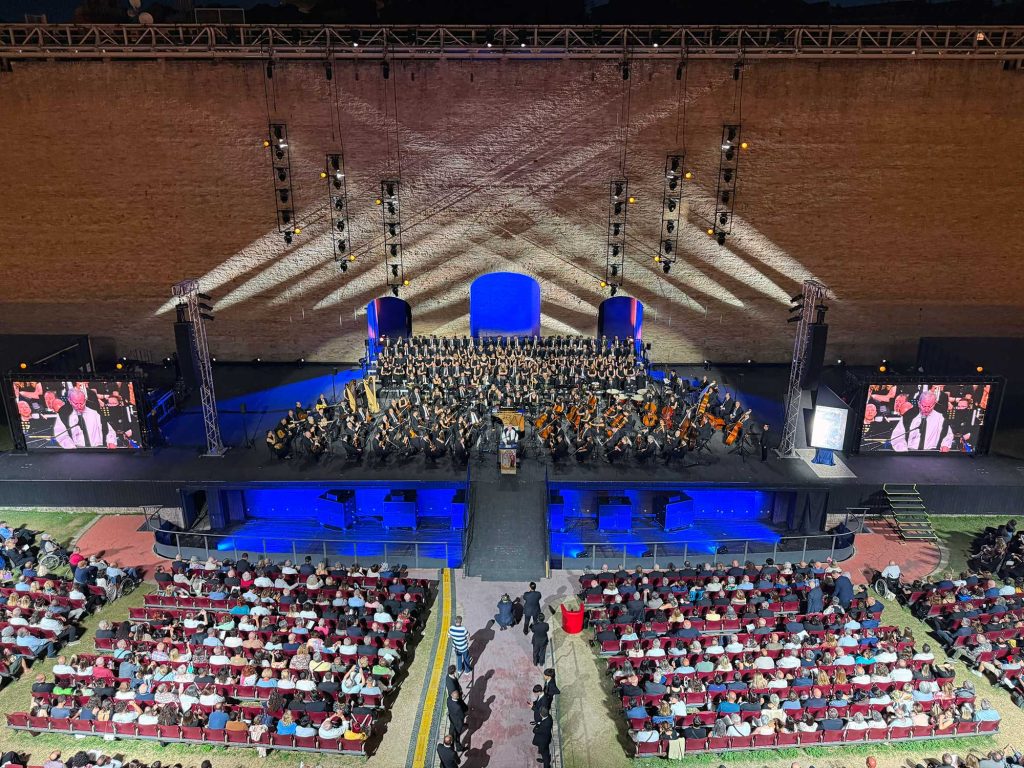
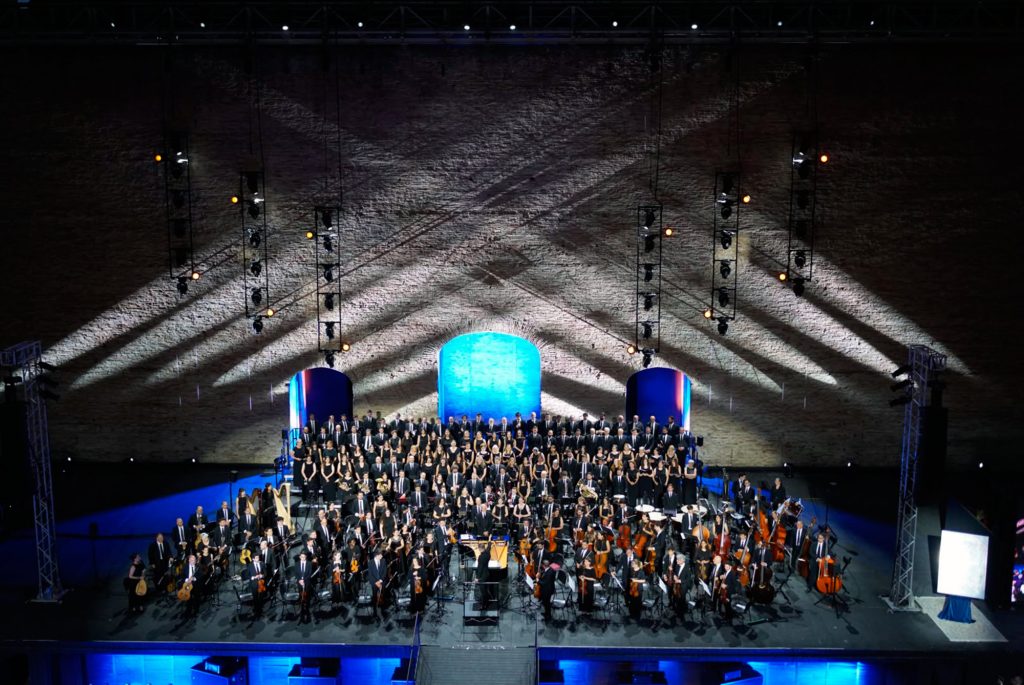
Macerata, declared the “City of Mary” in 1952 for its devotion to the Virgin Mary, is the birthplace of the great missionary to Asia, Matteo Ricci. Here, in 1991, the then-bishop, Monsignor Tarcisio Carboni, sought to establish a Redemptoris Mater Diocesan Missionary Seminary to train missionaries who, following in the footsteps of Matteo Ricci, would evangelize the countries of the East. At this seminary—designed entirely by Kiko Argüello, who, together with his collaborators and painters, created a large complex for welcoming and training students for the priesthood—a total of 110 priests have been ordained over the years, two-thirds of whom are already serving on mission in various parts of Asia.
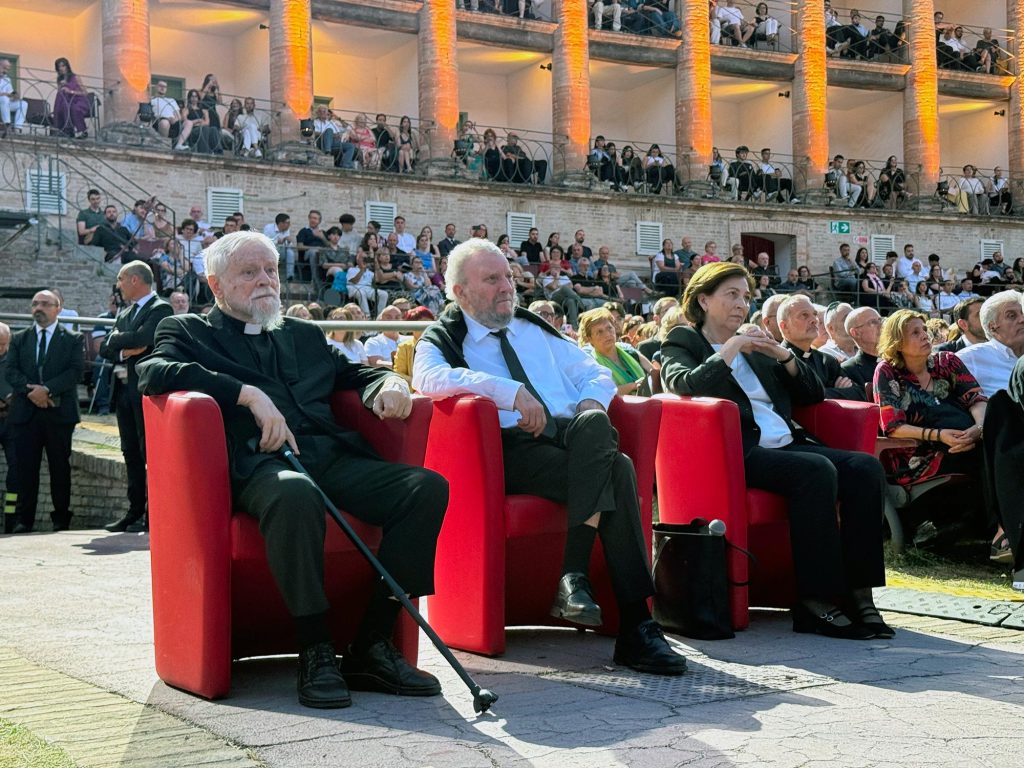
At the start of the event, the Bishop of Macerata, Bishop Marconi, greeted those present and opened the evening with a brief but profound reflection on the “Akedah”:
“Isaac’s Akedah was merely a prophecy of Christ’s Akedah. Christ, too—the innocent one par excellence—allowed himself to be bound by the bonds of death; indeed, he was nailed to the cross in death because of his obedience to the Father,” and he went on to say that “this is the kerygma, the heart of the Christian message. And its truth is better understood with the heart than with the mind. That is why Christians have always spoken of it in the language of the heart—that is, through art. That is why Kiko has done so through the language of painting, architecture, and also music.”
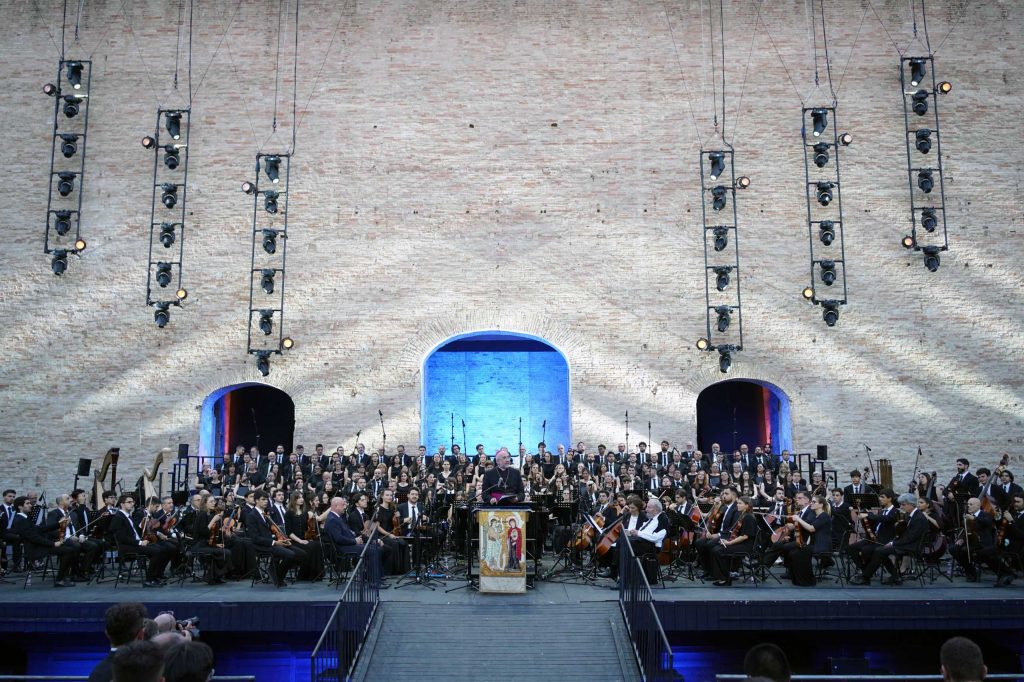
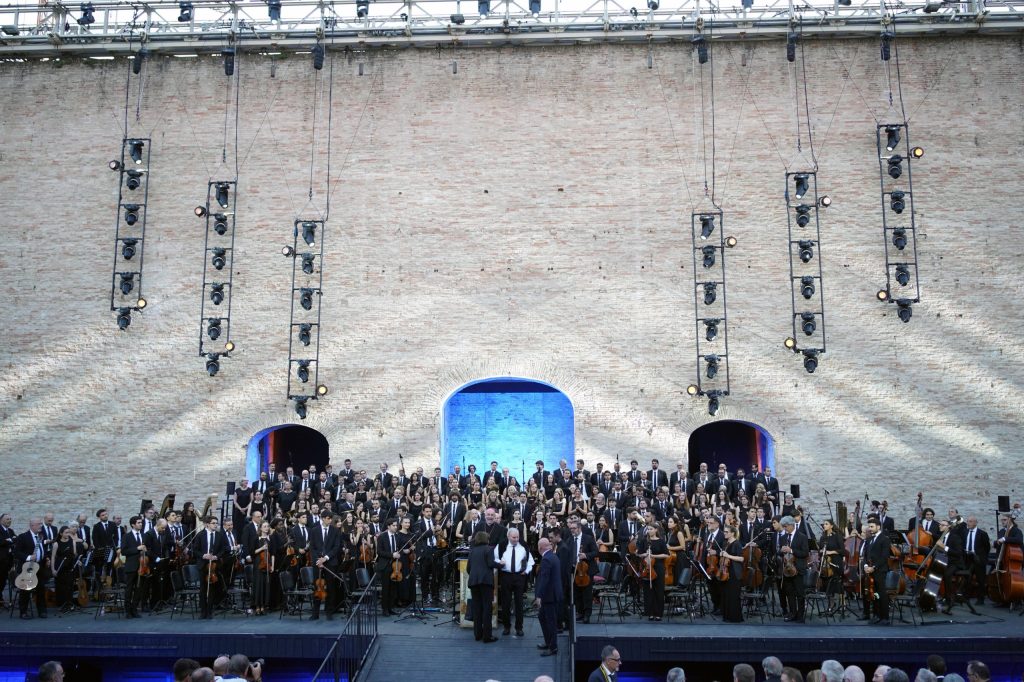
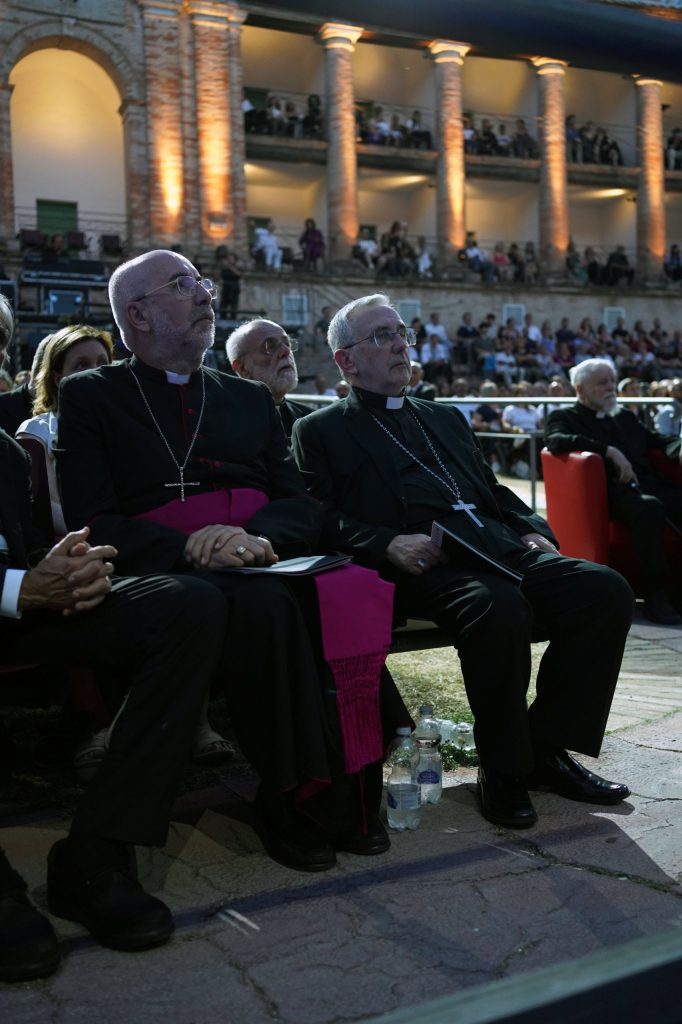
Kiko then greeted the bishops and the officials in attendance and briefly introduced the Symphonic Poem.
Don Ezechiele Pasotti